Keto Diet Guide: Ketosis, Keto Flu, Weight Evidence and Who Should Skip It
Quick answer
A keto diet cuts carbs to about 20 to 50 grams a day, and most people reach ketosis in two to four days. Keto flu can follow for one to two weeks. Reviews found only 1 to 2 kg more loss than other diets. People with type 1 diabetes, on SGLT2 inhibitors, with kidney disease, or pregnant should ask a doctor first.

What is the keto diet, in plain words?
A keto diet keeps carbohydrates very low and gets most of its calories from fat. With few carbs to burn, the liver turns fat into ketones and the body runs mainly on fat. That state is called ketosis (Cleveland Clinic, Ketosis: Definition, Benefits and Side Effects).
It is strict. Harvard Health says keto can supply as much as 90% of calories from fat and usually needs fewer than 20 to 50 grams of carbohydrate a day (Harvard Health Publishing, Should you try the keto diet?).
The 70/25/5 ratio on the Retride label
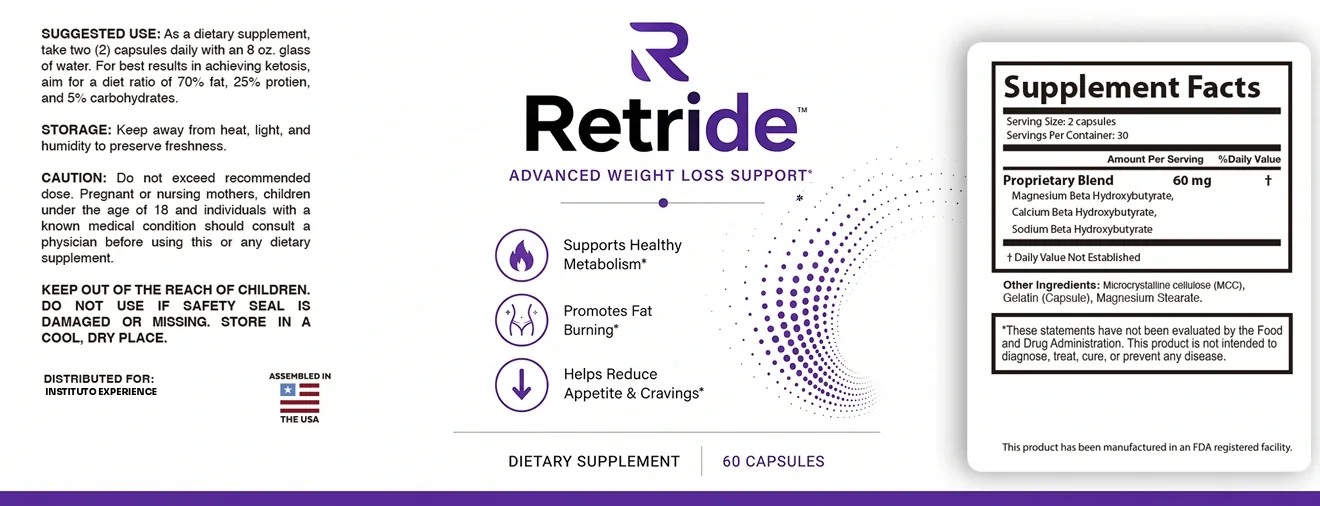
The Retride bottle prints a diet next to its dose: "For best results in achieving ketosis, aim for a diet ratio of 70% fat, 25% protein, and 5% carbohydrates." That is a standard keto split. It describes the food on your plate, not anything inside the capsule.
| Part of the plate | Share of calories | On a 2,000-calorie day | Grams |
|---|---|---|---|
| Fat | 70% | 1,400 calories | about 156 g |
| Protein | 25% | 500 calories | 125 g |
| Carbohydrate | 5% | 100 calories | 25 g |
The 25 grams of carbohydrate sits inside the 20 to 50 gram range linked to ketosis. Eat more or fewer calories and the grams move, while the percentages stay put.
How soon does ketosis begin?
Most people reach ketosis in two to four days once carbs drop to about 20 to 50 grams a day (Cleveland Clinic, Ketosis: Definition, Benefits and Side Effects). The track below follows a typical first month, using only what our sources report.
- Day 1
Carbs come down
You cut carbohydrate to roughly 20 to 50 grams a day and keep protein moderate.
- Days 2 to 4
Ketosis usually starts
Researchers call it nutritional ketosis once blood BHB passes 0.5 mmol/L.
- Days 4 to 11
Keto flu may show up
Symptoms can begin two to seven days after reaching ketosis. Some people get none.
- Weeks 2 to 3
Things settle
Keto flu usually lasts one to two weeks. In a 6-week diet trial, fasting ketones held above 1.0 mmol/L from week 2.
- Month 1 on
Water first, then fat
Early loss on keto is mainly water, so the scale slows once that is gone.
The ketosis line and water loss come from a 2025 review (Frontiers in Nutrition, Skartun 2025, Symptoms when starting a ketogenic diet). A day-by-day version is in our post on how long it takes to get into ketosis.
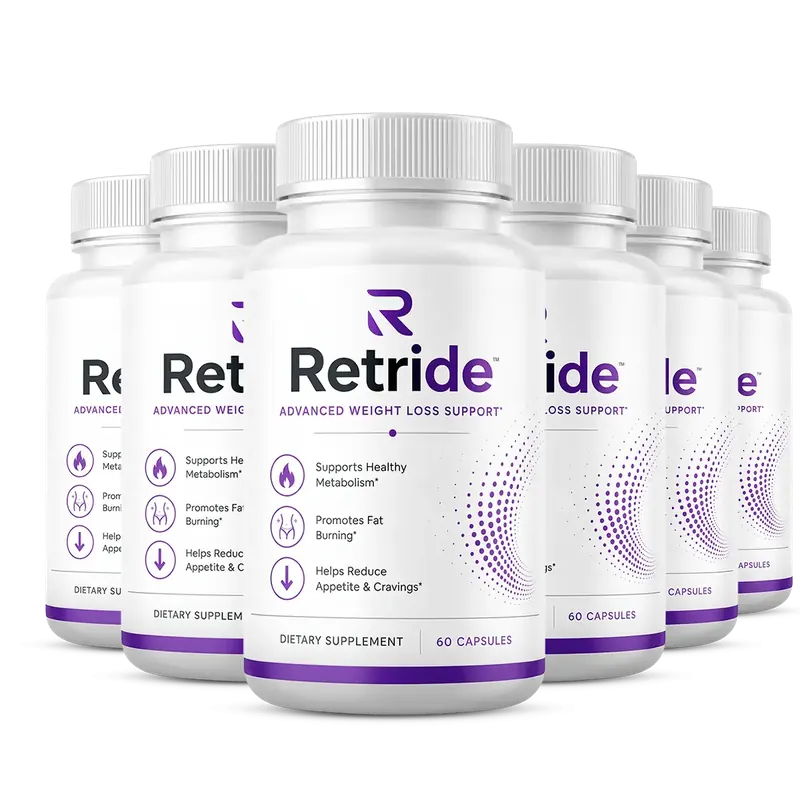
Thinking about Retride? The best price is on the 6-bottle pack.
6 bottles at $49 each, save $780. 60-day money-back guarantee · Tracked US shipping · Secure checkout.
What is keto flu, and how long does it last?
Keto flu is a group of symptoms some people feel in the first weeks of keto. Cleveland Clinic lists brain fog, fatigue, headache, muscle cramps, nausea, and constipation or diarrhea; they can start two to seven days after reaching ketosis and usually last one to two weeks (Cleveland Clinic, Keto Flu: What It Is and How To Manage It).
| Symptom | How often adults on keto reported it |
|---|---|
| Nausea | 8 to 16% |
| Diarrhea | 2 to 23% |
| Constipation | 1 to 68% |
| Headache, tiredness, brain fog | Common; no single rate given |
The ranges are wide because each study counted symptoms its own way.
Does keto help you lose more weight than other diets?
A little, and the gap shrinks with time. Large reviews found keto or low-carb diets gave about 1 to 2 kg (2 to 4 pounds) more loss than other diets, a difference the reviewers did not see as clinically important.
| Source | What was compared | What it found |
|---|---|---|
| (Br J Nutr, Bueno 2013, Very-low-carb keto diet vs low-fat diet (meta-analysis)) | Keto vs low-fat, 13 trials, 12+ months | 0.91 kg more loss on keto. Triglycerides fell more, but LDL cholesterol rose more. |
| (Cochrane (Naude 2022), Low-carb vs balanced-carb diets, plain summary) | Low-carb vs balanced-carb, 61 trials, 6,925 people | About 1 to 2 kg more loss; not clinically important at 3 to 8.5 months or at 1 to 2 years. |
| (Mayo Clinic, Low-carb diet: Can it help you lose weight?) | Very low-carb vs low-fat | More loss in the short term; by 12 to 24 months the benefit is small or hard to keep. |
So keto is one workable way to eat fewer calories, not a stronger one. The FTC puts it plainly: to lose weight you have to burn more calories than you take in (FTC, Gut Check: A Reference Guide for Media on Spotting False Weight Loss Claims).
Who should not try keto, or should ask a doctor first?
Keto is not for everyone. People with type 1 diabetes, on SGLT2 inhibitor medicines, with kidney disease, or who are pregnant or breastfeeding should talk to a doctor before cutting carbs this far.
Should you check with a doctor before keto?
Do you have type 1 diabetes?
Do you take a diabetes medicine whose name ends in -gliflozin (an SGLT2 inhibitor)?
Do you have kidney disease, or have you had kidney stones?
Are you pregnant, trying to get pregnant, or breastfeeding?
Answer every question to see your result. Nothing is saved or sent.
No flags here. Harvard Health still suggests a talk with a doctor and a dietitian first.
Talk to your doctor before you start, and bring a list of your medicines.
Keto is not a fit for you right now. Your doctor can suggest a safer plan.
| Who | Why it matters | Source |
|---|---|---|
| Type 1 diabetes | Diabetic ketoacidosis is a serious, possibly life-threatening problem when the body lacks insulin and ketones build up to dangerous levels. It is most common in type 1. | (CDC, Diabetic Ketoacidosis) |
| SGLT2 inhibitor medicines | These diabetes medicines can cause ketoacidosis even with blood sugar below 250 mg/dL; a low carbohydrate diet was a possible risk factor. | (FDA Drug Safety Communication, SGLT2 inhibitors and ketoacidosis) |
| Kidney disease | Mayo Clinic names kidney disease as a reason to check first. | (Mayo Clinic, Low-carb diet: Can it help you lose weight?) |
| Pregnancy and breastfeeding | Harvard calls keto safety here an open question. | (Harvard T.H. Chan School, Nutrition Source, Ketogenic diet for weight loss) |
Longer-term risks to keep in view
Harvard Health warns about higher LDL cholesterol, gaps in selenium, magnesium, phosphorus and vitamins B and C, and strain on the kidneys (Harvard Health Publishing, Should you try the keto diet?). Our who Retride is for page has a fuller fit check.
What is a realistic pace of weight loss?
About 1 to 2 pounds a week. CDC says people who lose weight at that gradual, steady pace are more likely to keep it off (CDC, Steps for Losing Weight).
NIDDK suggests a first goal of 5% to 10% of your starting weight within six months (NIDDK, Choosing a Safe and Successful Weight-loss Program). The table works that out for a few starting weights.
| Starting weight | 5% in six months | 10% in six months |
|---|---|---|
| 150 lb | 7.5 lb | 15 lb |
| 200 lb | 10 lb | 20 lb |
| 250 lb | 12.5 lb | 25 lb |
Faster is not better. The FTC warns that losing more than three pounds a week for more than four weeks can lead to gallstones, and NIDDK lists "Lose 30 pounds in 30 days" as a sign of a fad program. CDC pairs a steady pace with good food, regular activity, enough sleep and less stress.
Where does a keto supplement fit in a keto diet?
It is optional, and it is not what makes keto work. On the 70/25/5 plan the Retride label suggests, ketosis and any weight change come from the food.
Even large doses of ketone salts did not change that. On a controlled keto diet, people taking about 24 grams a day of BHB salts lost 7.3 kg in 6 weeks and people on placebo lost 8.0 kg (Frontiers in Nutrition, Buga 2021, Ketone salts and body composition). Retride's whole blend is 60 mg a serving, far below any studied amount.
If you are weighing a keto pill anyway, read our guide to choosing a keto supplement first, and our answer to whether keto pills work.
Keto diet guide: frequently asked questions
What is the keto diet?
It is a very low-carb, high-fat way of eating. With few carbs coming in, the liver turns fat into ketones and the body runs mainly on fat, a state called ketosis.
What is keto flu?
It is a set of start-up symptoms such as headache, tiredness, brain fog, cramps and nausea. Cleveland Clinic says it can begin two to seven days after you reach ketosis and usually lasts one to two weeks.
How much weight can you lose on keto?
Compared with other diets, not much more. Reviews found about 1 to 2 kg (2 to 4 pounds) of extra loss, and after a year the gap was small or not significant.
Is the keto diet safe long term?
Long-term safety is not settled. Harvard lists kidney stones, higher LDL cholesterol and low fiber and mineral intake as possible risks, and Harvard Health suggests keto is best as a short-term start.
Can people with diabetes do keto?
Only with their doctor. Ketoacidosis is most common with type 1 diabetes, and the FDA warns that SGLT2 inhibitor medicines can cause it, with a low carbohydrate diet as a possible risk factor.
How much weight loss per week is realistic?
About 1 to 2 pounds a week, says CDC. NIDDK suggests a first goal of 5% to 10% of your starting weight within six months.
Page check
Written by
Writes and fact-checks every page against the Supplement Facts panel, the label and public health sources.
Medically reviewed by
Dr. Richard Kowalsky, MD, Physician
Medical reviewer. Review date: October 12, 2026.
- Last checked October 11, 2026
- Facts from the bottle, the sales page and the sources cited above
- Found an error? Write to [email protected] or read how we check facts