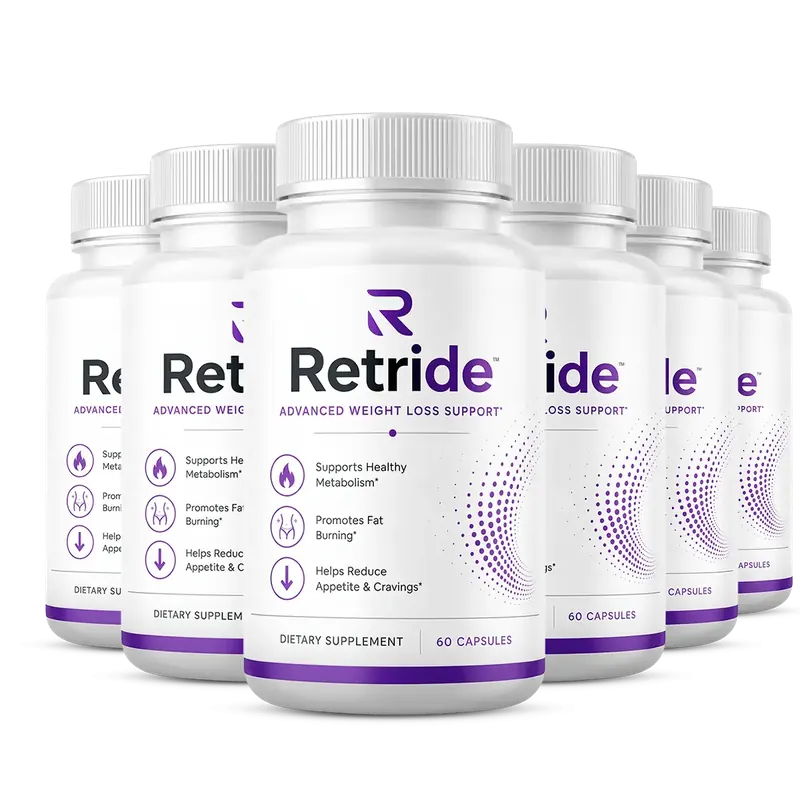
Retride Editorial Standards: Sources, Claims and Corrections
Quick answer
We rank sources from the bottle label down to clinic pages, and every health line links to a source we read. Each study result shows its dose next to Retride's 60 mg blend. We never print fake reviews, doctor names or weight-loss promises, and errors are fixed openly with a new date.
Which sources do we use, and in what order?
We rank sources by how close they sit to the product. The bottle beats the sales page, and a public agency or a published trial beats a blog or a forum.
When two sources disagree, the higher one wins, and the page says what the lower one claimed.
| Rank | Source | What we use it for |
|---|---|---|
| 1 | The label: Supplement Facts panel and full label wrap | Serving, blend, other ingredients, directions, cautions, storage |
| 2 | The seller pack, confirmed at checkout | Prices, packs, the guarantee, contacts, returns address |
| 3 | Agency pages: FDA, FTC, CDC, NIH | Regulation, safety warnings, weight-loss pace, fraud alerts |
| 4 | Reviews and trials in journals | BHB salt doses, ketone levels, weight results, side effects |
| 5 | Clinic and university pages | Keto diet basics, keto flu, who should ask a doctor first |
Every source was opened and read before we cited it. The full list sits on each page that uses it, and the about page explains who does the checking.
How do we word health claims about Retride?
We write what a source shows, at the dose it used, in the people it studied. The Retride label claims are quoted as the brand's words, and each is tested against the research.
- On the label
Promotes fat burning
Front of the bottleWe report that ketone salts at about 24 g a day added no fat loss to a keto diet.
- On the label
Helps reduce appetite and cravings
Front of the bottleWe note that lower hunger was seen with large ketone ester doses, a different compound.
- On the label
For best results in achieving ketosis
Suggested useWe explain that the 70/25/5 diet, not the capsule, is what causes ketosis.
- Not shown
Weight loss without diet or exercise
Not on the labelWe never write it. The FTC lists that claim as false.
| We avoid | We write instead | Why |
|---|---|---|
| Burns fat | Studies did not show added fat loss | Matches the trial results |
| Puts you in ketosis | The diet on the label causes ketosis | No study measured 60 mg |
| Has no effect | Tens to hundreds of times below studied amounts | We know the gap, not the outcome |
| FDA approved | Made in an FDA-registered facility (label) | Registration is not approval |
| Clinically proven | No study of this product has been published | None exists |
The FTC says ads for supplements need solid proof (FTC, Health Claims (business guidance)), and it lists seven weight-loss promises that are always false (FTC, Gut Check: A Reference Guide for Media on Spotting False Weight Loss Claims). We hold our own pages to the same test.
Why do we compare the dose to the studies?
Because dose decides whether a study applies. The whole Retride blend is 60 mg per serving. The BHB salt studies we found used grams, so every result we cite comes with its dose next to it.
We write "tens to hundreds of times less than studied amounts" and show the numbers. We do not write "no effect", because nobody has tested 60 mg. Even at 24 g a day, ketone salts added nothing to a keto diet (Frontiers in Nutrition, Buga 2021, Ketone salts and body composition).
What happens before a page goes live?
Each page moves through five checks. A page that fails one goes back to the start of that step.
- 1
Draft from the label
Product facts come only from the label images and the seller pack.
- 2
Source each health line
Every health statement links to a source we opened and read.
- 3
Check the dose
Any study result shows its dose and who took part.
- 4
Check the words
No cure or fat-burning language, no doctor names, no fake reviews.
- 5
Date the page
The Last checked date moves forward with each real change.
How do we write about safety and the keto diet?
Calmly, once and clearly. Retride itself is a small 60 mg blend, so most safety questions come from the keto diet that the label suggests, and that is where our cautions point.
Each caution names who it is for and links to the agency or clinic that states it. We say "talk to your doctor first" where a source says that, and we do not turn it into "never" or "dangerous" when the source does not.
- People with type 1 diabetes: ketoacidosis is most common in this group (CDC, Diabetic Ketoacidosis).
- People taking SGLT2 inhibitor medicines: the FDA lists a low carbohydrate diet as a possible risk factor for ketoacidosis.
- People with kidney disease, and anyone pregnant, nursing or under 18.
We do not shame anyone about weight, use fear to sell, or oversell what any product can do. Readers are adults who can weigh facts, so we give them the facts and the gaps.
How do we handle reviews, ratings, photos and seals?
The seller sent sample reviews, a star score and order counts. We could not verify any of them, so none appear. Review slots fill only after the order desk matches a buyer to a real order, and critical reviews get the same space.
Photos of people from the brand's material are used only as illustration, with a caption saying we do not know who they are. Seals from the brand are shown only where we test what they claim, on the Retride testing and quality page.
How are errors corrected?
Fast and in the open. When a reader or a source shows we got something wrong, the fix follows four steps.
Check the claim
We reopen the source and the label to confirm the error.
Fix the page
The wrong line is replaced, not hidden, and any page that repeats it is fixed too.
Move the date
The Last checked date on the page moves to the day of the fix.
Reply to you
If you wrote to [email protected], we tell you what changed.
Errors and source tips go to the website desk. Order questions go to the order desk; both are listed on the Retride contact page.
Who pays for this site, and does it change what we write?
Goretride earns money when readers order through the buttons here. That is a reason for care, not a reason to stretch the truth.
We never trade a caution for a sale. A page that oversells leads to refunds and complaints, so accurate pages also make sense for the business.
Editorial standards: frequently asked questions
Who writes the Retride pages?
The Retride Editorial Desk at Goretride. The desk signs pages as a team, and every page closes with a page check that shows who wrote it.
Has a medical reviewer checked the Retride pages?
Not yet. The medical reviewer slot is a highlighted blank on every page and is filled only after a real review.
Why do you call the dose tiny when the brand does not?
Because the numbers say so. The whole Retride blend is 60 mg, and the BHB salt studies we found used 3.75 g to about 24 g.
Do you ever say Retride has no effect?
No. No study tested 60 mg, so we cannot say it does nothing. We say it is tens to hundreds of times below studied amounts.
Why are PubMed links missing from your sources?
PubMed and PMC pages would not open for our checks, so we cite the journal's own page instead. We never add a link we have not opened.
Do you take money to change a page?
No. The site earns money only on orders through its buttons, and no one can pay to change a fact, a source or a caution.
Why do you link to agency pages so often?
Because they are public, dated and free to read. You can open the FDA, CDC or NIH page yourself and check that it says what we say.
How do I report a mistake?
Write to [email protected] with the page and the line. Include a source if you have one. The desk reads mail Mon-Fri 9:00 am-5:00 pm ET.
Page check
Written by
Writes and fact-checks every page against the Supplement Facts panel, the label and public health sources.
Medically reviewed by
Dr. Richard Kowalsky, MD, Physician
Medical reviewer. Review date: October 12, 2026.
- Last checked October 11, 2026
- Facts from the bottle, the sales page and the sources cited above
- Found an error? Write to [email protected] or read how we check facts